Thursday, November 01, 2007

You Meet the Nicest People

Back in 1999, when I was barely hanging on by my fingernails, a colleague asked me if there were any benefits to having a hearing loss. The question took me by surprise since my modus operandi was mere survival, just trying to make it through the day with some semblence of functioning. The only thing I could think of to say was, "I don't hear my husband snore."

Now, almost a decade later, my list of benefits has expanded exponentially. I am still deaf, but with my cochlear implant I am connected to people again! So now the hopelessness and despair is gone, and I can think of some benefits to hearing loss:

  • A wonderful circle of friends I would never have met with "normal" hearing. We are not alone in our struggles with hearing loss. I am so grateful to those dear ones who have been willing to share, to advise, to allow me to benefit from their experiences.
  • An opportunity to help others on their journey. What a privilege to share with those who are just beginning the journey of living with a hearing loss!

  • A greater empathy for those who struggle. Everyone has times of challenge in this life. Courage, resilience, patience and other similar character traits are rarely strengthened in times of ease, are they?

  • A new sense of purpose and a cause to champion.

I think the benefits list will keep increasing with time. What do you think?

Wednesday, September 19, 2007

Going Bilateral

My 7th CI anniversary!! I can hardly believe it! Today I sent an email to my CI center confirming my surgery date for a second implant --- Is that cool or what! I will become bilateral on December 28, 2007. Whoopee!!

Sunday, February 18, 2007

Flying Solo

We CI users need to celebrate every new hearing accomplishment, don't we? Well, I made a solo round trip from Orlando to Dallas yesterday, even changed planes twice. When uncertain, I verified what I thought I heard over the PA systems by asking a nearby person, "Did they just say that . . ." so the answer would be either yes or no. People didn't seem to mind at all. This flying day without my husband was, for me, reclaiming the ground lost in those dark days of functional deafness. 'Course, it would have been more fun to have had a partner with which to share the journey.

Friday, February 02, 2007

Remodeling

We are up to our ears (or paint cans) in remodeling projects. I discovered an advantage to being a CI user today. A shop vac is painfully loud to normal ears when operated in a small space, like a closet. Gerry can't handle it, but I can remove the CI and vacuum in silence - - - no pain, no risk of damaging my hearing. Pretty cool!

Tuesday, January 02, 2007

Watches with alarms


"An alarm is beeping," I said, and all heads turned to me with looks of bewilderment.

"What?"

"There's an alarm beeping somewhere," I repeat, grinning from ear to ear.

It is pure delight to hear something that no one else in the room can hear! (Now that sounds like I need the help of a psychiatrist, doesn't it?) Both Gerry and Dad received new watches for Christmas and neither of them can use the alarm function, because they cannot hear the soft, high-pitched alarm. It comes through clearly to me, thanks to my enviable electrodes.

Monday, October 23, 2006

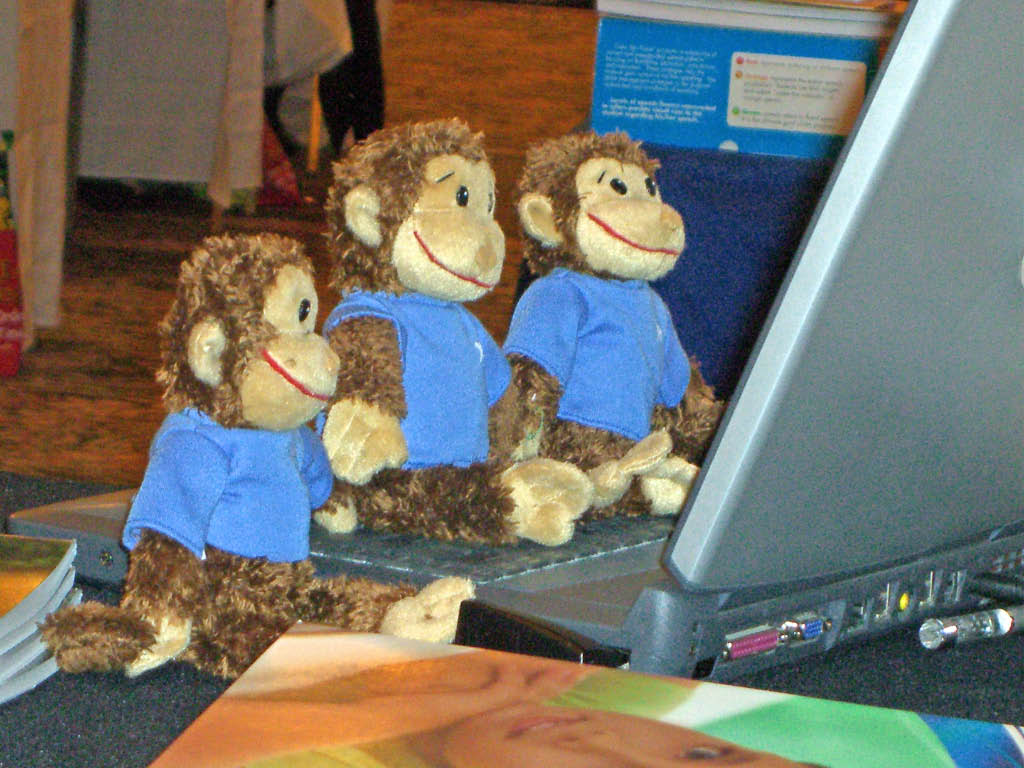
AB's Beanie Buddies

Our AB "friends" joined us for a fun time in Greenville, South Carolina, this past weekend (Oct. 13-14, 2006) at a regional AG Bell workshop. I was smiling, too, when I realized that I was hearing the seminar very well when I positioned myself under the ceiling speakers. The setting was a large ballroom where exhibitors framed the many rows of attendees. An acoustic challenge for the average hearer, I would think. Hip hip HOORAY for my bionic ear!

Monday, July 03, 2006

Fireworks in 2006

A deluxe fireworks show is so much more than a visual experience. I learned this back in 2001 when I thrilled to my first fireworks display with a cochlear implant. But this year was another memory maker because of an event sponsored by Advanced Bionics at the Hearing Loss Association of America's annual convention at Disney World in Orlando. Imagine experiencing a grand fireworks extravaganza at Epcot in the company of scores of other CI users!

The lady sitting next to me had a first generation implant like mine and we both heard the synchronized orchestral music, the descending whistle sounds as the visual spirals cascaded downward, the bean-shaker sizzling sound with the ones that look like white rain, and the standard launch phoosh and subsequent booms and crackles as the pyros burst into color. Incredible!

I got teary-eyed as I took it all in, thinking about what all of us would be missing if the music and sound were absent. For me, if it had been 5 years earlier, it would have meant turning off my hearing aid because of the pain I always endured in the presence of loud sounds and just standing there in total silence. The display would have been one dimensional, a mere visual display of movement and color. Granted, that visual drama would have been a pleasure, but the difference when you add the sound field is an exponential one. It fits in the issue of quality of life, I think.

Having the blessing of a cochlear implant not only allows me the emotional thrill of all the elements of the pyrotechnics but, more importantly, the too-often-taken-for-granted joy of conversing with my new CI acquaintance about the experience we just enjoyed together. What a spectacular evening!

Monday, June 12, 2006

Georgia Peach CI Retreat at Callaway Gardens, 2006


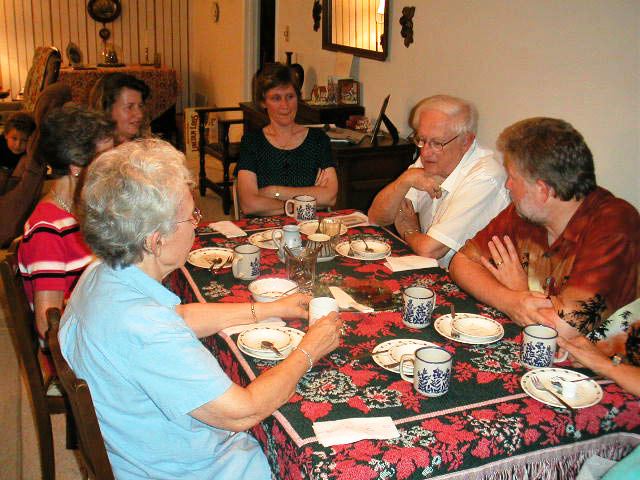
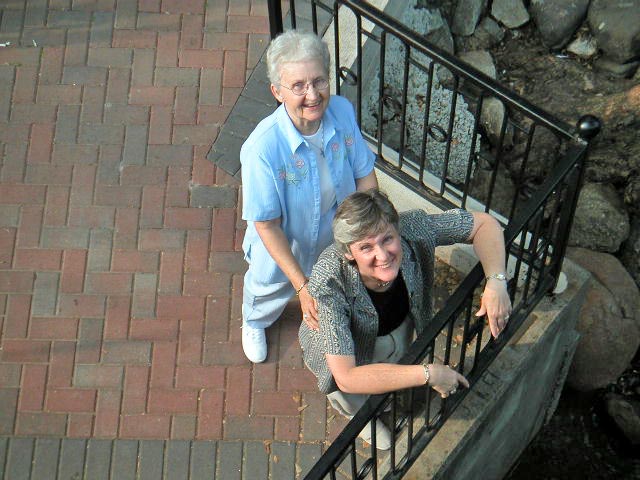
Does it look like Gerry and I had a good time at Georgia Peach this year?

Sunday, May 14, 2006

Mother's Day, 2006


I had an exciting, once-in-a-lifetime opportunity to surprise my mom at a ladies luncheon on Saturday. Unbeknownst to her, I had submitted a tribute about her which was chosen to be one of three to be presented after the meal and before the keynote speaker. I had also submitted a set of pictures and had gone to the church's sound booth for a recording session prior to the event so that it would be done as an audio-visual on full screen for the 600 attendees to see and hear. The look on Mom's face will be forever etched in my memory! This is what I said:

"A Tribute to my Mother"

If this tribute is read aloud at the "HospitaliTea", my mom will not hear it. She will be seated beside me with both hearing aids tuned to full power and with her FM system adjusted to its maximum capacity, but to no avail. She will not be surprised or be overcome with frustration or self-pity. She realized before she signed up as a table hostess that the acoustics in this large room and the many competing voices around her would render her state-of-the-art hearing aids useless for comprehending the cheerful chit-chat of her invited guests and for enjoying the inspirational speakers.

For decades I’ve watched my mom cope with her progressive hearing loss with incredible grace and resilience. I’ve marveled at the tremendous effort she expends in an attempt to stay connected with people. I’ve observed her affirming nods and inviting smiles after greeting and initiating a conversation with an acquaintance or a newcomer, knowing full well that she was not getting most of what was being shared. I’ve been awed by her ability to make each one feel welcomed and engaged, despite the fact that she’s often virtually clueless as to the content of the dialogue.

Why doesn’t she just stay home instead of struggling through all the unsuccessful social encounters? Why not withdraw from social obligations, from volunteer work at the church’s Resource Center, from inviting people to the house for a home-cooked meal and an evening of fellowship? How is it that she does not lose heart? I’ve seen that momentary flash of discouragement in her eyes after a long-distance phone call from my brother and his family, yet she gives a happy hello the next time they call and asks for the umpteenth time, “What’d they say?”, after Dad hangs up the phone.

You see, I know what it’s like to live in a world of missed conversations and agonizing isolation amidst a crowd. I have felt that hot flush of embarrassment when I’ve realize that I’ve misunderstood once again or have said something inappropriate. I’ve known the deep heartache that engulfs you when you can no longer recognize a once beloved and familiar hymn. I, too, have made the painful journey from normal hearing to severe hearing loss. In my case, however, the pilgrimage “progressed” to total deafness.

Yet, I thank my gracious and loving heavenly Father for giving me a courageous mom who has shown me how to weather the storm and to trust His precious promises. God knew before I was ever conceived that I would need such a wonderful role model. Jeremiah 29:11 says, " For I know the plans I have for you, declares the Lord, plans for welfare and not for calamity to give you a future and a hope." He also knew that the miracle of a cochlear implant would restore my hearing and allow me the privilege of being Mom’s “ears” again whenever there’s an opportunity. It is truly a divine blessing to sit beside her today and to help her “stay connected” to God’s people.

Wednesday, May 03, 2006

A Disaster Simulation


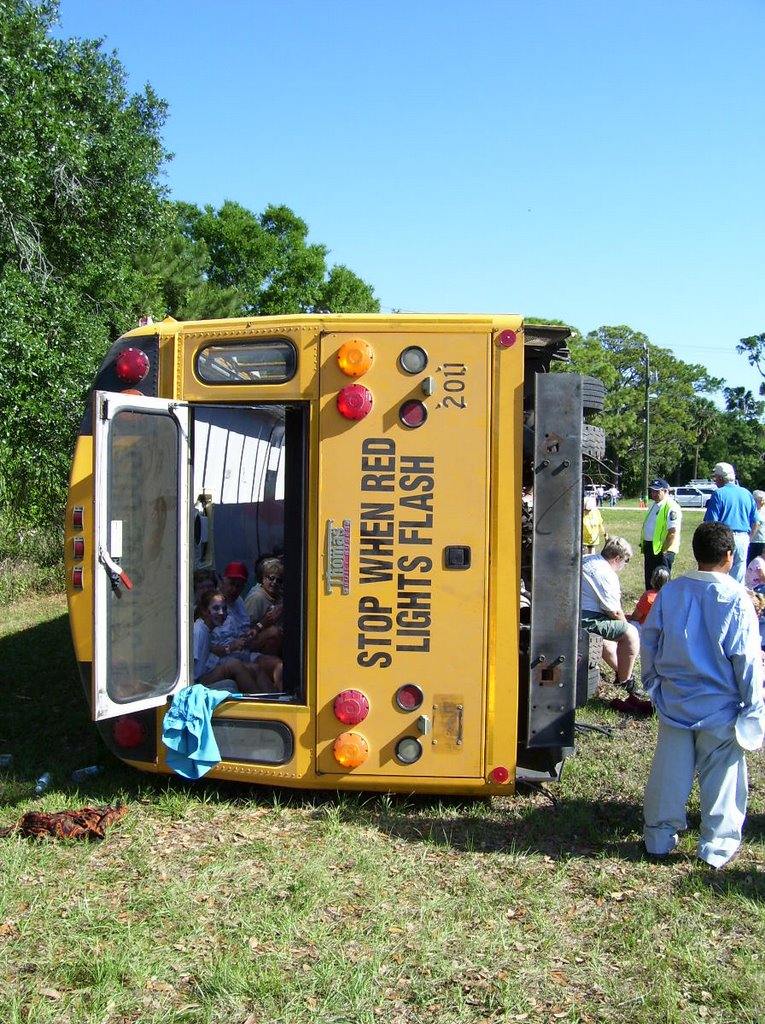
  1. Last month’s topic at my CI support group was emergency medical issues and cochlear implants. We discussed medical identification jewelry, the training (or lack of) that's given to local hospital ER personnel concerning how to deal with hearing impaired patients, and other issues related to safety. So when a notice was posted on our community bulletin board, “Volunteers needed to act as victims in a county-wide disaster simulation exercise”, Gerry and I signed up. Here’s my chance, I thought, to witness firsthand how a deaf person is treated during a large-scale emergency medical crisis.

    The scenario was a terrorist-incited explosion which resulted in an accident involving a bus and an ambulance. A group of us with all manner of realistic mock injuries were stationed inside the bus. Gerry was "assigned" a broken femur bone (left leg) and I was to be mentally altered, confused and disoriented but otherwise unharmed. I wore my medical ID necklace over my torn and stained T-shirt.

    With a healthy mixture of excitement and trepidation, I pocketed my BTE as soon as the sound of sirens signaled their eminent approach. Obviously, my world went silent and the experiment commenced. About 4 hours later, after being triaged to a yellow tarp in the field, transported to a local hospital, and processed for treatment, the drill was over. I eagerly re-connected my BTE to my internal implant and, voila, the glorious sounds of the real world were suddenly mine again!

    What did I learn from this unusual experience? For what it’s worth, here are my observations:

    1. The policemen and firefighters were not interested in reading my medical ID. Perhaps they ignored my frantic cries of “I’ve lost my implant. I can’t hear!” and my waving my medical ID pendant for their inspection because they knew me to be “out-of-it”.

    2. The assumption made by all rescue personnel assigned to me, both in the field and at the hospital, was that I knew sign language. It was even recorded on one of my hospital forms. Do they not know that most late-deafened adults grew up in the hearing world and never learned sign language? ASL is only useful if the other party also “speaks the same language”!

    3. No one thought to write down the questions they were asking me or to point to the questions on the form. Apparently being deaf means that you are also illiterate!

    4. I felt very vulnerable and totally dependent on my powers of observation, acutely aware of the reality of the fact that this simulated exercise would have been my real world experience if not for the miracle of CI technology. Thank God for my bionic ear!

    5. Being functional deaf is as exhausting as I remembered it to be. When we arrived home, I took two aspirins and headed for the couch.

Monday, October 03, 2005

Fall, 2005, in Southern Europe

Our travels in southern Europe in the fall of 2005 to visit my brother will forever bring back some wonderful memories and a few CI recollections as well. Gerry and I traveled in a rather non-conventional way, crossing the Atlantic and hopping from country to country in military aircrafts as space permitted. This entailed a considerable amount of sitting in terminals waiting for flight announcements. We came back to the states via a cruise ship that was repositioning from the Meditteranean to a new season of service in North America.

I gave my CI quite a workout with a whole host of hearing environments in the five weeks we were away from home. The final "CI tally" had more on the plus side than the minus column. There were both surprising successes and some not-so-great acoustical encounters.

What I learned:

  • Understanding English when it is spoken with a heavy accent over a PA system is just too tall an order for this CIer. Only a word or two per sentence would come through, not enough to comprehend the total message. A hearing companion is such a blessing since military terminals have no visual message boards, and the personnel we encountered had no apparent training in communicating with the hearing impaired.

  • A cochlear implant can get knocked off accidentally by this same blessed spouse, which does make for a brief and terrifying moment of sheer panic! I could not hear my precious BTE hit that stone floor, but my eyes registered the potential catastrophe. Thank the Lord that glorious sound was restored as soon as my trembling hands re-connected the headpiece to my noggin'.

  • Italian architects know nothing about acoustics. Those beautiful tile floors, grand high ceilings and tall arches, winding marble staircases, and spacious atriums are visually appealing but an auditory nightmare for the hearing challenged. The absence of drapes and other sound-absorbing interior fabrics also contribute to the echo chamber effect. My brother lives in one of these Italian villas.


  • An infrared ALD was delivered to our stateroom on the first day of our cruise. I was so impressed and promptly deposited it in my pocket for use at the first night's entertainment. It never occurred to me to check to see if it had any batteries!

  • Arranging in advance for a stateroom TV with closed captioning does not guaranteed that there will be anything broadcasted that is closed captioned. The movies they televised, although current releases, were stored in the ship's computer bank without captioning. We could get CNN via the ship's satellite system, but no captioning.


  • Cruise directors are like so many other people. (How's that for a profound declaration!) They graciously receive the suggestion to lower the microphone slightly when addressing an assembled group of passengers so that those hearing impaired people in the audience can see their lips. I suppose they intend to do so, but old habits are hard to break.

  • What a thrill to be able to pick up the stateroom phone and understand the caller's words! Most hearing people just take that for granted.


    • Friday, August 05, 2005

      Summer Trips

      The bags are unpacked, the laundry’s done, and the accumulated mail is sorted and awaiting action. It’s a bit of a letdown that our summer trips are over, and the mundane routines of life at home have resumed. But what an adventure Gerry and I have shared, and now I’ll record some of the highlights.

      California: June 7-9

      In June, Gerry and I had a wonderful 3 days in southern California (my first time to see the LA area), the first leg of our week’s adventure. There were 16 of us volunteers in attendance at the home office of Advanced Bionics, coming from all over the USA and from Canada. The agenda for the 2 days of training was packed with presentations by senior managers, research directors, and training supervisors. Their goal was to equip us with knowledge: to understand the company's history, to increase our understanding of the implant technology, and to inform us of current research and future vision. We were provided with many resources to take home and were free to ask questions and to share our experiences with them and with each other. It was so exciting to meet the leadership and to see in action the company's commitment to service to the customer and of their pursuit of “best-in-class” technology.


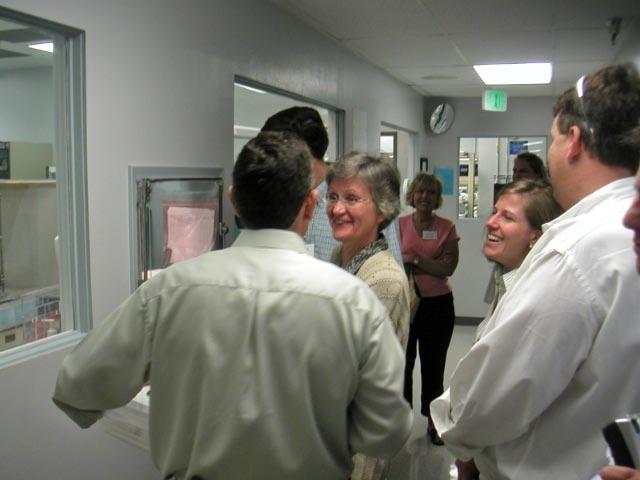
      On the second day, we were given a marvelous tour of the manufacturing plant by the facility's Vice President. I was so awed by the privilege of seeing the complexity of the "miracle" in my head, of learning of the years of research to develop each component, and of observing the skill of so many hands in assembling the parts under high-powered microscopes in sterile rooms with specially designed instruments, high-tech machines, computers, and . . . . It was really an overwhelming 2 days, to say the least!

      Georgia: June 9-12

      We left California to fly to Georgia to begin Phase 2 of our trip. My parents met us in Atlanta, and Gerry took the wheel to drive us to the north Georgia mountains for the GPCIA (Georgia Peach Cochlear Implant Association) family weekend retreat. God graciously provided safety on the highways for my folks' journey from Orlando, and the trip northward on Friday seemed effortless since we had so much to share. We even missed our exit because we were too busy talking!

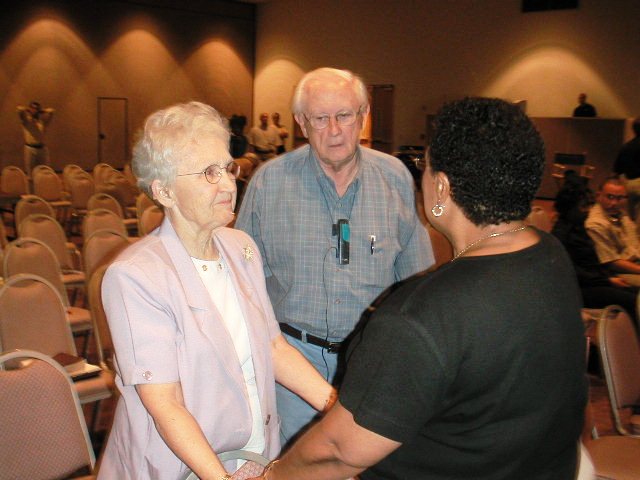
      Our task at the conference was to give 2 presentations during the workshop times and to interact during the "free" time and mealtimes with fellow CIers and those who had come to investigate/learn about implants. Following the keynote address Saturday morning by Heather Whitestone, Miss America 1995, we spoke on the topic, "We're in This Together: the Shared Journey of Hearing Loss and Restoration". Gerry and I wanted to alternate in our sharing, using a back-and-forth style as we shared both personal experiences and practical suggestions. Being unpracticed at this, we asked God for smoothness and ease, as well as a clear testimony of God's design for marriage. We jointly felt His empowering and the prayer support of family and friends! We were reminded afresh that God keeps His promises! I noticed that Mom and Dad were misty-eyed throughout our presentation!

      An interactive "rap" session was on the schedule following our talk in which we were to field questions and encourage the audience to share their reactions to what we had said. To think that I could actually hear people’s questions and could interact with individuals afterwards is nothing short of miraculous!

      Miami: July 13-14

      After a long, hot drive and a less-than-invigorating encounter with Miami’s afternoon gridlock traffic, we arrived at the Airport Hilton. The beautiful view of the surrounding lake and the distant downtown skyline from our 17th floor window immediately refreshed us.

      It was such a joy to share our story that evening with the attendees of the Advanced Bionics summer seminar. Back in our room, we critiqued our presentation and made many changes in the hopes of improving it for our next opportunity. I was too mentally stimulated to sleep soundly that night, which turned out to be a blessing as I was easily awakened by the glorious colors of the sunrise.

      New Orleans: July 27-28


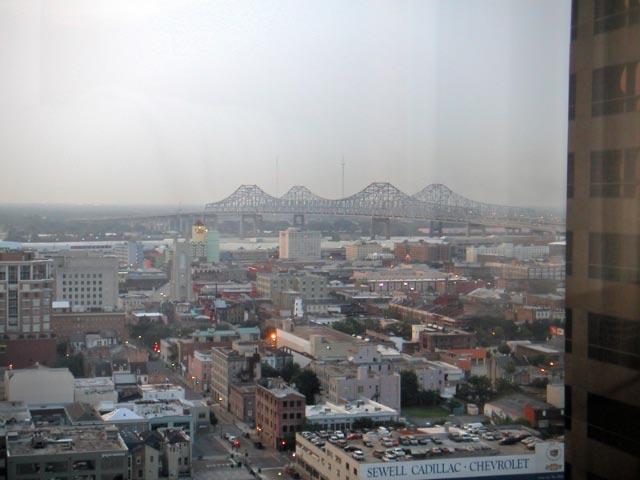
      Flying Southwest Airlines to New Orleans was not one of the highlights of our trip to New Orleans. We didn't realize that we'd be at the end of the line for first-come-first-serve seating on a flight that originated from Hartford - - - ah, the stuff of which memories are made! After checking in at the Hyatt Regency and photographing our very urban view from the 26th floor, we decided we had time to walk to the river before our evening commitments. I'd never seen the mighty Mississippi and was eager to get a sense of this famous city of good food, old architecture, and jazz music. The way to see the city is on foot, but on a humid July afternoon it's also the way to become a pool of sweat!
      Our second summer seminar began with lots of informal conversations before the start of the official program. I think that it's the interesting people we are privileged to meet and the sharing of common struggles and triumphs that warms our hearts at Advanced Bionics events. One dear gentleman emailed me the next day and said, "It was so refreshing to see someone like you, who had experienced the pain, discomfort, embarrassment, etc., come out a winner with the implant . . . . You are one of the big reasons that I'm following through with this surgery. You've made it a lot easier for me . . . . Thanks for your positive attitude and prayers. I'm dedicating this surgery to the ADAMS!! " Now, I ask you, who needs any greater reward!

      Saturday, January 01, 2005

      Music


      My Heart will be Blessed
      with the Sound of Music


      Music --- for some, it's just that annoying sound piped into restaurants that interferes with conversation, or it's that incredibly loud racket that causes people and even cars to visibly gyrate at traffic lights. It may bring to mind the word diversity since music comes in many different styles and tastes: jazz, classical, sacred, country, R & B, folk, rock, etc. It is the language of the soul, a means of expression that has no equal.

      For me, the word music conjures up a great deal of emotion. As I was losing my hearing, I was also losing music with all its beauty and pleasure. Because understanding people's words, not the lyrics of a song, was crucial to maintaining a social and professional life, I tried to ignore the impact that the loss of melody was having on my quality of life. The cassette player was relegated to the back of the closet; the radio was turned off. The newspaper announcements or posted flyers about upcoming concerts were dismissed after only a quick glance and a deep sigh.

      But every Sunday when I'd ask my husband Gerry to "mouth" what the organist was playing during the prelude and the offertory, the grief would move closer to the surface. I grew up in a home where music was played almost every waking hour, and hymns were an especially meaningful part of my life. Gerry has a beautiful baritone voice, and he does a lot of solo work in church and elsewhere. My hearing, aided by the latest state-of-the-art hearing aids, had deteriorated so drastically that his voice had become almost painful to me, especially in a confined space like our car.

      I have one particularly personal and poignant memory during those dark days when my hearing aids no longer helped me to stay connected and I knew nothing of cochlear implants. Gerry had purchased the newly restored version of Disney's Fantasia and was so excited about the superb sound quality. I remarked casually, "Honey, I can't hear that at all." There was silence and when I glanced his way, he was crying. At that moment, I understood the pain that was his because of my loss and more importantly, the depth of his love for me.

      I knew before my surgery that a cochlear implant was, by design, intended for improving speech perception and that hearing/enjoying music was not a "given". I knew that some people were able, over time and with much practice, to enjoy music again, and that there were even some successful musicians with CI's. I also knew that many CIers didn't listen to music at all, because they couldn't follow the melody or couldn't "hear" it as music. So I went into the "adventure" with the perspective that getting music back in any degree would be a bonus, a blessing beyond expectation.

      For me, the first sounds after activation of my CI were very electronic. Gerry and I experimented with the piano keyboard during the first week, and discovered that there were certain points on the scale where notes went up instead of down (or vice versa), even though my eyes told me which way the pitch should be going. But, unlike with hearing aids, no pitch or loudness was painful, and no notes were silent. There were many tears of joy! The high frequencies were the most tantalizing, perhaps because they had been gone for so many years. Wind chimes, music boxes, birds . . . I was like a kid in a candy store, only it was a music box store at the nearby mall!

      With subsequent trips to the CI clinic for computer programming changes and as my brain adapted over time, there were fewer notes on the scale where pitch was "off". It was probably about 3 or 4 months down the road when CI sound began to lose its mechanical, electronic quality. At the same time that the "PA system"disappeared, Gerry began to sing on key again! Not a coincidence, I'm sure. I began to hear the melody lines again whenever the tune was a song I knew.

      After about a year of gradual improvement in the overall sound of music, I realized that most sopranos still did not quite get "up there" as they should. The piano keyboard continued to have a few wayward notes that refused to change pitch. I found certain instruments very beautiful and melodic (e.g., a pan flute, xylophone, handbells) almost immediately after activation, and others, like violins, to be scratchy, whiny, or just plain awful!

      At about my three-year anniversary, we attended a symphony concert, and I was overcome with emotion as I realized that I was actually hearing the instruments as they should be - - - distinct and resonant and melodic and beautiful . . . well, there were just no words to describe the experience! What my "ordinary" brain had accomplished was nothing short of miraculous. What a Creator!

      The final stanza from my favorite musical, The Sound of Music, will always and forever bring tears to my eyes:

      "I go to the hills when my heart is lonely. I know I will hear what I've heard before. My heart will be blessed with the sound of music. And I'll sing once more."

      Friday, November 14, 2003

      Reflections on recovery from CI surgery


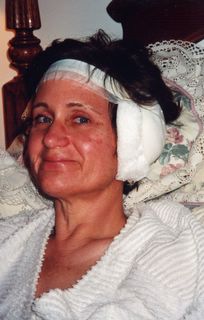
      I suppose that implant procedures have changed quite a bit since my surgery 3 years ago. My post-surgery agenda did not include a post doctor's appointment. I had surgery early in the morning and was home in my own bed by evening, armed with pain medication, antibiotics, suppositories if needed for nausea or vertigo, a huge bandage secured by a velcro-type head strap that was not to be removed for a week, ointment for the incision, and advice to sleep with lots of pillows to keep my head elevated.

      On the afternoon of my surgery when we made the long drive home from Johns Hopkins in Baltimore to our home in Virginia (100+ miles), I began to feel something wet on my neck. A trickle of blood was leaking out from under my thick bandage - - - not pleasant. I was never so glad to arrive home and get in my own bed!

      Recovery from surgery varies a great deal from person to person. For me, I experienced some soreness on the left side when chewing food, and food had a metallic taste for awhile. I blew my nose very gently one time during the first week, and really regretted that! I wished I'd been told how painful that can be!

      I also remember my hair "hurting" on the implant side when out in the wind that first week. I was implanted in my "deaf" ear, so I could wear my hearing aid during the month of waiting for hook-up, so could stay somewhat tuned into those around me. Sleeping was not pleasant for at least a week, until I could sleep on both sides again and could do away with the elevated head position.

      I also experienced a lot of "noises" in my head while healing --- you know, tinnitus sounds, like rain on a metal roof, a ratchet being rotated slowly, even sounds similar to a radio being on when there was no such thing in the room. Crazy, huh? Tinnitus is common, but not all CIers have the concert of internal sound that was my experience.

      I had absorbable stitches, so had no need to go back to the surgeon for removal. My "hook-up" appointment was exactly one month from surgery date, at which time the swelling was minimal enough for the magnet to adhere to the internal components. Funny the things you remember . . . like how great it was to wash my hair and to get that strap off my forehead!

      I took it easy those first few days and did not venture outside the house until the weekend. I do remember being a little dizzy on that first day out and about. Unfortunately, I had a 2-day bout with vertigo two weeks after surgery, but no re-occurrence since then, thank the Lord. As I recall, the head noises (tinnitus) were not painful, just bothersome at night, waking me up every time I turned my head, but not too bad during the day.

      As I think back on that period between surgery and hook-up, I would say it was a good time for me. Apart from the normal process of physical healing after such a surgery, it was a restful, quiet time and an exciting time of great anticipation. I read a super book called "Hear Again" by Arlene Romoff and attempted to prepare myself for the "work" of learning to hear again that I knew was ahead of me. I was blessed to have time off from teaching and no pressing deadlines or obligations. Gerry and I went on a weekend retreat to "Cue Camp" to learn cued speech . . . but that's another story for another time.

      Monday, July 09, 2001

      The Whole Story: Part 1, The Descent

      A Future and a Hope

      “For I know the plans I have for you, declares the Lord, plans for welfare and not for calamity to give you a future and a hope.” Jeremiah 29:11(NASV)


      “What’d he say?” my husband asked absently. A young man, who was carrying his young daughter, had just exited the elevator at the Outpatient Center at Johns Hopkins Hospital. The dangling, bare foot of this little one had captured our attention, because it was so peculiar for a cold, December day.

      “She just got her cast off,” I replied as we also made our way out of the elevator. We were at the hospital for a “mapping” appointment, scheduled after two months of sound generated by my cochlear implant. It took a few moments before we both realized that a very significant event had just occurred. Could it be that I had heard a passing comment that Gerry had not heard? This was definitely a new experience for both of us, something that had never happened in all our married life!


      The Descent


      My hearing problems had begun soon after beginning my career as a special education teacher and had progressed (or should I say regressed) in the pattern typical of a person plagued with a sensorineural hearing loss. Bi-annual trips to the audiologist inevitably meant the sad but not surprising news of yet another drop in decibels and the need to invest in a better, more powerful hearing aid. My journey toward deafness was gradual and spanned over two decades, but that did not diminish the devastating effects on my life, professionally and personally. When it was time to speak to my employer about accommodations in the workplace, it felt like the beginning of the end of my professional competency. It was a fairly “tall order” for me to continue to teach phonics to elementary age children with any degree of effectiveness.


      I knew that the occasional remark from a colleague or parent intimating that my hearing loss would serve to make me a better, more understanding teacher of children with disabilities was well meaning and sincere. Yet it simply was not true. I had always cared deeply for my young charges and had empathized with their struggles to achieve success in school. I had prided myself in my skills as a resource teacher, honed by nearly 25 years of experience with teaching students of all ages. I knew that what I was dealing with was a decline in teaching skills, not an enhancement, because of my hearing impairment.

      My students, for the most part, had been eager to help and to serve as my “ears” whenever they could. My employer was also gracious and willing to act on my suggestions for equipment that might help, such as an amplified phone, a newer model window air conditioner designed for quiet running, a fire alarm with a strobe light, and an FM system to use in class and during faculty meetings. While these assistive listening devices were immensely helpful, I was still having a difficult time coping with the hearing demands of the job.
      I guess there is a “line in the sand” when any additional loss in hearing capacity, however small, puts you over the edge in terms of speech comprehension. For me, it occurred sometime in 1999. My acquired lip-reading skills, my ability to fill in the missing words through context clues, and my seasoned aptitude in “faking” it had kept me functional for many years. Now these compensatory strategies were no longer enough. It seemed that the addition of any background noise or any other voices beyond the one person speaking directly to me caused a significant breakdown in communication. I just couldn’t grasp what people were saying!

      I think the private realization of my approaching deafness came when I began to understand that being deaf was not really defined as the total absence of sound but rather the inability to understand speech if your eyes are closed. You see, I could no longer understand anything people said when I could not see their faces. Using the telephone, even with a patch cord to transmit the sound to the FM boot on my hearing aid, was not satisfactory. There were the colossal headaches and the ever-present fatigue that comes from the stress of always being on the alert for conversation that might be taking place around me. Many of the sounds amplified by my aid were not only distorted but also painful because of my recruitment problems. I began to dread the thought of another day of social encounters. I had long since removed myself from the daily lunchtime crowd in the teachers’ lounge, choosing to close my classroom door and relish the silence. I prayed that somehow I could make it through the afternoon with some semblance of efficiency.

      There were many humiliating incidences that I still recall with raw emotions during those dark days when my hearing aid was no longer adequate for the demands of my job. I had arrived early one morning and had hastily clamored into school with an armload of files and with a mind preoccupied with the myriad of things on my “to do” list. It was now several hours later when I happened by the side door as a colleague was entering the building. She asked, with finger pointing toward the parking lot, “Isn’t that your car over there with the motor running?” I mumbled a feeble, “Yes, thank you” and dashed red-faced to the car. There had already been private embarrassments at home when I would return to the bathroom for a last minute mirror check and discover, to my surprise, that I’d left the water running in the sink, but this event seemed to me to be a very public declaration of the magnitude of my hearing loss.

      The social and psychological impact of a profound hearing loss on a person who grew up with normal hearing deserves greater attention than it’s usually afforded. An enormous amount of emotional energy is expended in a desperate attempt to stay connected with friends and family, to continue to share in the spontaneous flow of ideas that maintains relationships. But you sense that you are losing the battle for equal access to communication with each passing day. No more listening to a cassette of relaxing music or keeping abreast of current events by listening to the daily news on the radio during the commute to work. No more picking up the phone to chat with a friend about trivia or about more substantial things that are vital in sustaining friendships. No more enjoyable social outings to restaurants, concerts, movies, or the mall. The burgeoning fears, anxieties, and apprehensions that are attached to new situations, chance encounters, or other social obligations can begin to transform you from a relaxed, confident, and spontaneous person to a withdrawn, tense, and intense observer of life. In short, the stress of my profound hearing impairment was exacting its emotional and physical toll.

      Sunday, July 08, 2001

      The Whole Story: Part 2, The Decision

      The Decision


      In March 2000, I was once again seated before my doctor to discuss my annual hearing tests. The additional decline in hearing capability was no surprise but the news that I was now a possible candidate for a cochlear implant was unexpected. My otolaryngologist explained that his policy was to implant the better ear because there was a greater chance of success in the ear that had the most recent stimulation. He suggested that I give it serious consideration and that I pick up some literature at the front desk. My response to this recommendation would have been an immediate, “Let’s schedule it!” if he had advised an implant for my left (“deaf”) ear. But I was not ready to sacrifice the only residual hearing I had left in my right ear. Driving home, Gerry and I discussed the idea of getting a second opinion. The next day he called our insurance company, and then the Listening Center at Johns Hopkins Hospital and arranged a consultation for May 11, 2000, the first of six appointments in the 5-month candidacy process. I was encouraged by the knowledge that surgeons there often implanted the “worst” ear and with great results.


      By the time the verdict was in, I was more than ready to proceed with surgery. An implant in my left ear offered me a hope for the future, the possibility of some restored hearing and the prospect of enough speech comprehension to resume some degree of independence and connection with people. The Listening Center was careful to emphasize that there were no guarantees, only the prediction that it was likely that I would hear more environmental sounds than what I was hearing with my hearing aid. Fine … I had nothing to lose, and everything to gain.